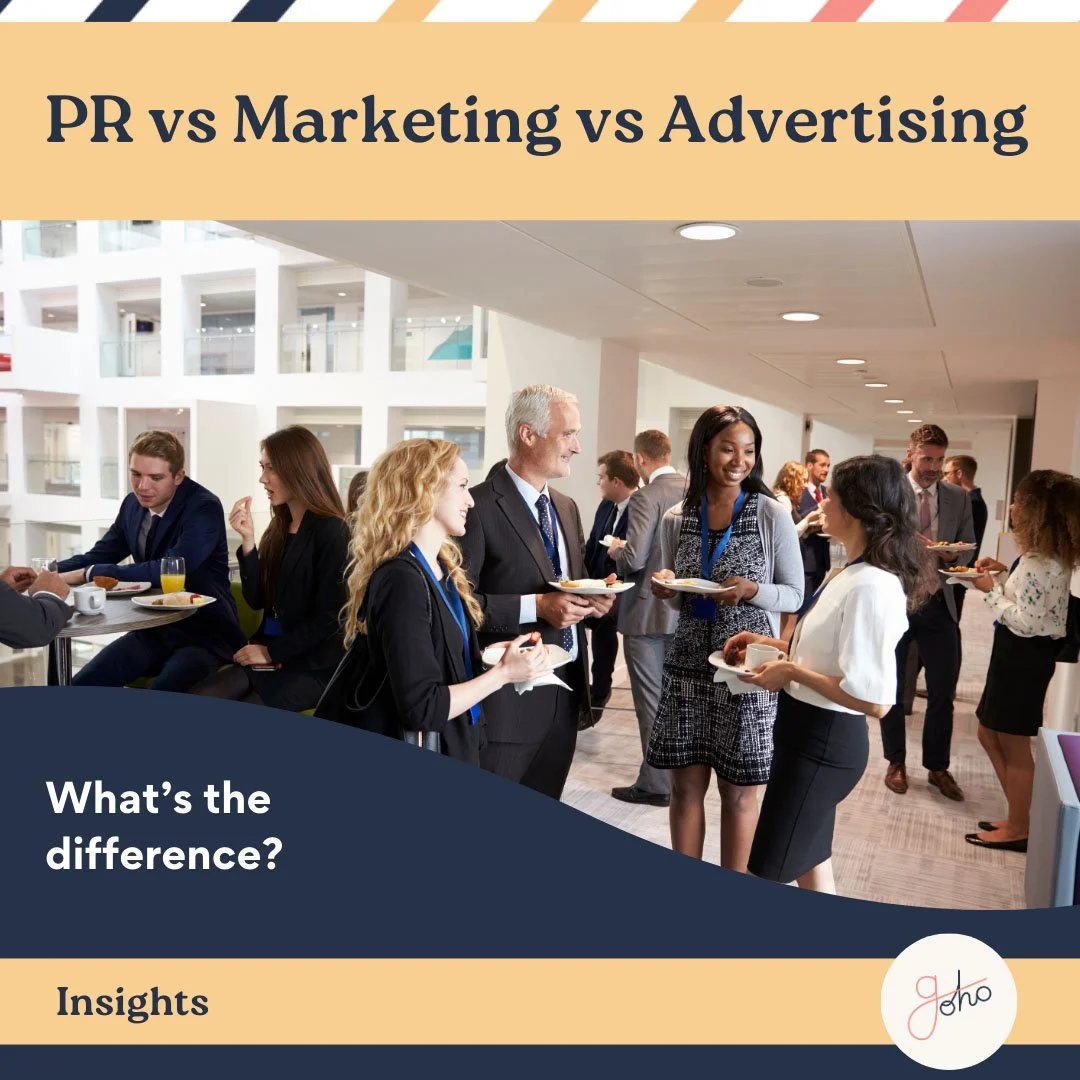
PR vs Marketing vs Advertising: What’s the Difference?
PR, marketing and advertising are often grouped together. They overlap, they support each other, and they are frequently handled by the same teams. But they are not the same thing. Understanding the difference is key to building a brand strategy that actually works.
What Is PR?
Public relations focuses on reputation, credibility and long-term brand perception. The goal of PR is to shape how a brand is talked about and understood by the public.
PR is earned rather than paid. It includes press coverage, media relationships, thought leadership, brand storytelling, events and experiential campaigns. Instead of pushing a direct sales message, PR builds trust and authority over time.
If people believe in your brand, they are more likely to choose you later.
What Is Marketing?
Marketing is broader and more commercial. It is about positioning, messaging, audience targeting and driving measurable outcomes like leads, sign-ups or sales.
Marketing includes content marketing, email, social media, SEO, paid ads and campaign strategy. It often uses insights from PR to amplify messaging and reach the right audience more effectively.
Marketing answers the question: how do we get the right offer in front of the right people?
What Is Advertising?
Advertising is paid placement. You pay for space and control the message entirely.
This could be digital ads, print ads, outdoor, paid social or sponsored content. Advertising is fast, scalable and predictable, but trust levels are generally lower because audiences know the message is paid for.
Advertising works best when it is supported by strong brand credibility built through PR and marketing.
How They Work Together
The strongest brands do not choose between PR, marketing or advertising. They use all three strategically.
PR builds trust and narrative.
Marketing drives consistency and conversion.
Advertising accelerates reach.
When aligned, they reinforce each other and create far more impact than any single channel on its own.